People decisions can now be drafted with AI before anyone has examined their human consequences. A student can ask a model to write a policy, summarize employee comments, draft a training plan, analyze team conflict, or recommend a talent move. The course needs to ask what happens to people, power, trust, and performance when that recommendation becomes real.
What AI actually changes about people decisions
Students can make an HR recommendation sound fair without showing why it is fair. AI makes that easier. The language arrives polished: inclusive, balanced, evidence-based, manager-friendly. It can still conceal weak evidence, unequal effects, and a decision no one could explain to the person affected.
That is why the course needs people-risk discipline. Human capital advantage depends on behavior, incentives, culture, fairness, explainability, and the connection between people systems and enterprise performance.
Use these lenses across cases. They form a rubric, but they should not flatten every assignment into the same exercise:
| Course lens | What students should answer |
|---|---|
| Team behavior | How will the decision change coordination, conflict, trust, and accountability? |
| Workforce evidence | Which claims come from data, observation, interviews, or policy, and which are inferred? |
| Consulting logic | Can the team translate people data into a recommendation managers can act on responsibly? |
| Enterprise edge | Does the people system build a capability competitors cannot easily copy? |
| Fairness and explainability | Could the organization explain the decision to the person affected by it? |
| Culture signal | What behavior will the organization reward, punish, or normalize? |
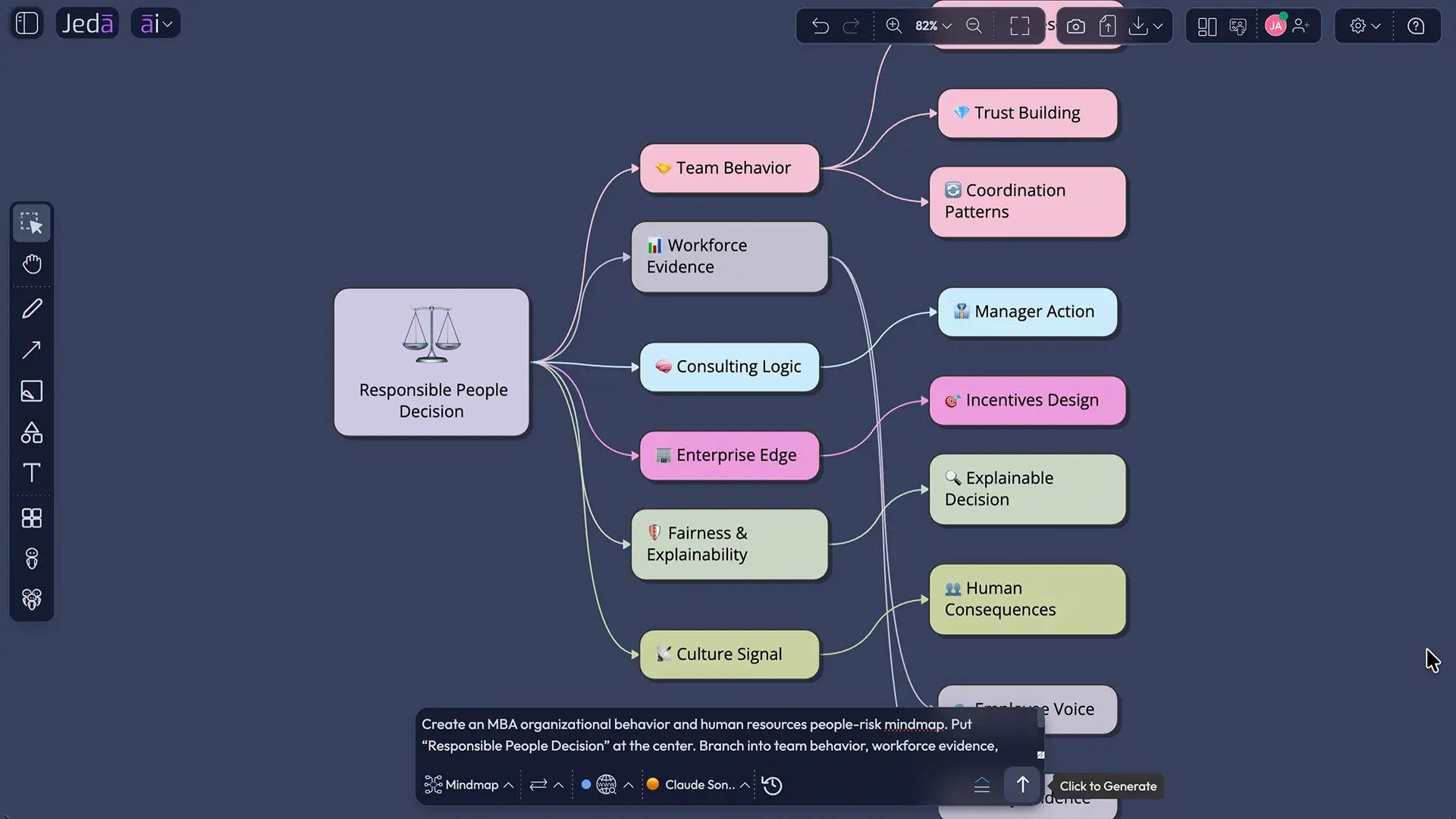
The framework gives the course its foundation. Students then need three habits:
| Teach this | Why it matters if you skip it |
|---|---|
| Durable principles: teams, culture, motivation, fairness, and human capital strategy | Without them, students treat people decisions as workflow optimization |
| Judgment: the discipline to test whether a recommendation is valid, explainable, and humane | Without it, they graduate able to write HR language but unable to own HR consequences |
| Practical tactics: using AI to sort evidence, compare options, and surface people risks | Without them, the course never shows how responsible managers actually work with AI |
AI output should be treated as an HR analyst's first pass. It can organize evidence, but it cannot outrank human consequences.
What AI reasoning gets wrong in organizations
HR is already in the AI transition
SHRM's 2025 Talent Trends analysis on AI in HR reports that 43% of organizations use AI in HR tasks, up from 26% in 2024, with recruiting as the most common application. Workday's AI skills research, based on 2,500 full-time workers across 22 countries, reports that 81% believe AI is changing the skills needed to succeed and 93% say AI lets them focus on higher-level responsibilities.
AI is already changing the employment relationship. The course needs to cover both sides: how AI changes HR practice and how HR protects the organization from poor AI use.
Text-only AI exercises will not close the gap. Students should defend people decisions when data is incomplete, employee voice is uneven, and generated recommendations sound more certain than the evidence allows. Build cases around team behavior, culture, fairness, explainability, and managerial accountability.
They also need to sort people evidence with AI without flattening people into inputs.
Trade first-pass sorting for people judgment
Put people-risk on one canvas
Jeda.ai is a visual AI workspace with framework-based outputs, document and data analysis, a collaborative canvas, and multi-model comparison. The canvas can keep team maps, survey themes, culture evidence, policy options, fairness checks, manager actions, and final recommendations in one place.
Start with approved evidence and policy constraints. Compare more than one model's interpretation, then trace each recommendation back to behavior, data, or policy. A second model can challenge a people recommendation, but it cannot certify fairness.
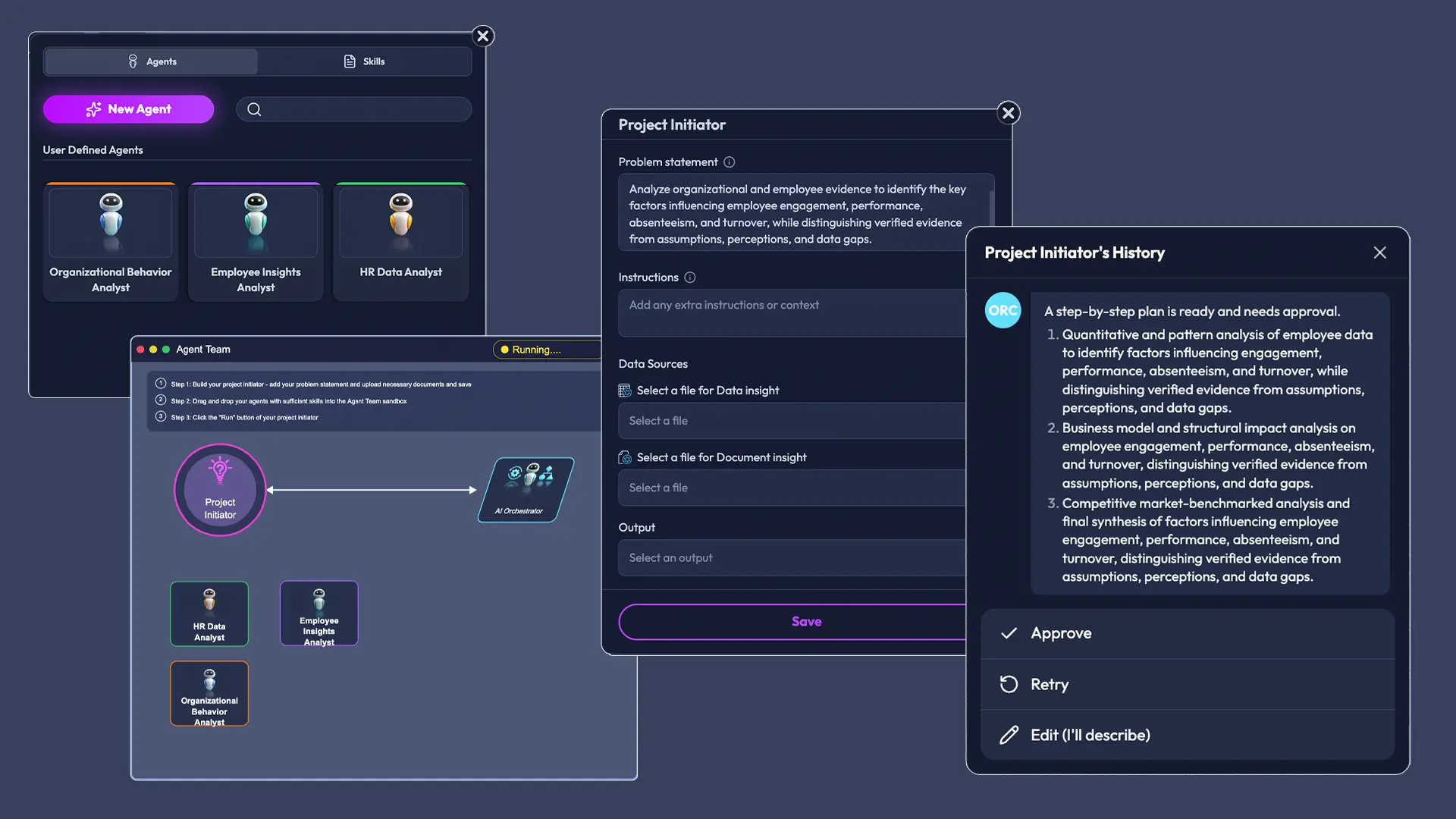
Jeda.ai also offers an agentic MBA case workspace. Students can create, upload, edit, or select a skill; assign it to a specialist agent; and build a small agent team in a sandbox. Before work begins, the team reviews the Orchestrator's plan, adds the case question and shared files, keeps agent-specific files with the right agent, and resolves skill or team gaps. In this course, the review should ask whether an agent is being allowed to make a people decision without human approval.
The 45-minute people-decision audit
Build the rest of the course
Extend the exercise with the sample syllabus, exercises, quizzes, projects, and instructor guide.
A useful OB and HR assignment should leave students with one habit: never let polished language outrank human consequences.
Explore Jeda.ai
Join over 150,000 professionals who trust Jeda.ai for their strategic analysis.
Explore Jeda.ai